The Longest Day Brings the Heaviest Workload
Sunday, June 21, 2026 is more than just a calendar milestone. It’s the Summer Solstice — the moment when the Sun reaches its northernmost position and delivers the longest period of daylight in the Northern Hemisphere. For most people, this means grilling, yard games, and long evenings. For others, it signals the beginning of a season when yard work becomes physically overwhelming.
The summer solstice marks an astronomical turning point, but it also marks a practical one. As daylight stretches and temperatures climb, lawn care demand surges across the country. This isn’t coincidence — it’s biology and physics colliding with human need.
Heat and Growth: A Demanding Season for Yards (and Bodies)
Summer doesn’t just feel longer because of extra daylight. Grass responds to warmth and sunlight by growing faster, demanding more frequent mowing and care. At the same time, NOAA is forecasting above-average temperatures across all 50 states this summer, with some regions facing extreme heat warnings.
This combination creates a real problem for older adults, veterans, and neighbors who can no longer safely handle yard work. Mowing a lawn when the heat index climbs is not a mild inconvenience — it’s a serious health risk. The body has to work twice as hard to stay cool while pushing heavy equipment, and dehydration, heat exhaustion, and falls become genuine dangers.
For someone with arthritis, limited mobility, or a chronic condition, the choice becomes stark: risk their health or let the yard slip into code violation territory. Neither option is acceptable.
Demand Is Real — And So Is the Gap
Approximately 72% of U.S. households hire lawn professionals at least once a year, spending hundreds of dollars annually on yard maintenance. Meanwhile, the U.S. lawn care market is projected to reach $58.69 billion by 2033, reflecting how central yard care is to American homeownership.
But that market serves people with disposable income. It doesn’t touch the neighbor on a fixed income who can’t afford a $45 mowing service every week when temperatures soar. It doesn’t reach the veteran living alone who managed their own yard for decades but physically can’t anymore. It doesn’t help the older adult whose family lives three states away.
This is where the gap appears — and where it matters most.
Why Volunteers Step In During Peak Season
I Want To Mow Your Lawn connects 1,800+ volunteers across all 50 states with older adults, veterans, and neighbors who need free lawn and exterior home care relief. Peak summer season is when these connections become most critical.
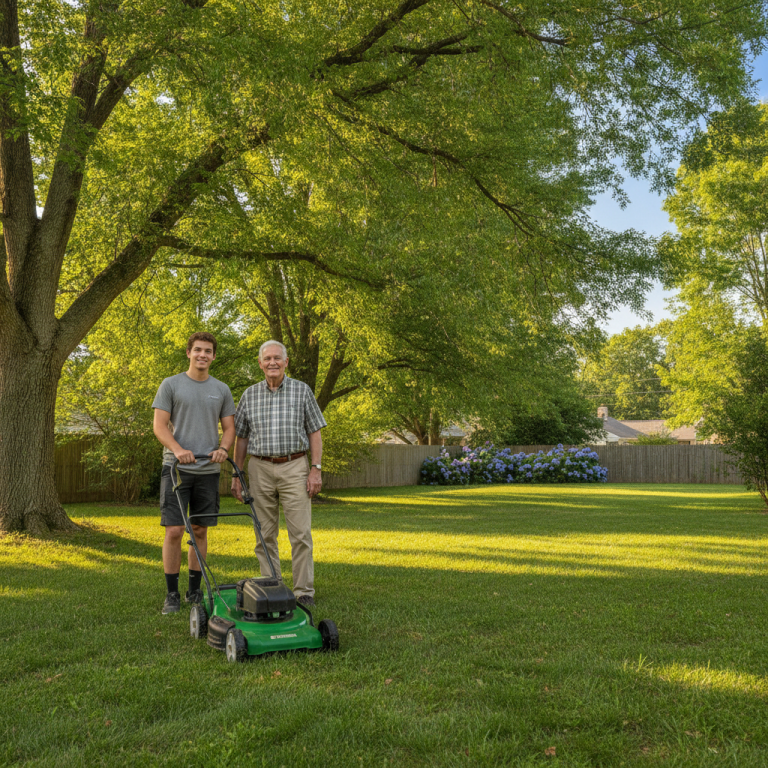
During June, July, and August, volunteers are out mowing yards not because they’re contractors or because it’s their job, but because they’re neighbors who recognize a genuine need. A volunteer might spend a Saturday morning helping an older adult who would otherwise face fines or dangerous overgrowth. Another might support a veteran managing both physical limitations and the mental health challenges that yard neglect can trigger.
The solstice season demands this kind of community support. It’s not sustainable for individuals to DIY through 14+ hours of daylight in 90-degree heat. It’s not realistic to expect people with mobility limitations to push a mower safely. What’s realistic is neighbors showing up, together.
Planning Ahead for Summer’s Peak
If there’s someone in the neighborhood — an older adult, a veteran, a family member — who might struggle with yard care as heat intensifies, now is the time to check in. Early June is the moment to ask if help would make a difference. Don’t wait until July when overgrowth is visible or code enforcement knocks.
For those who might benefit from free yard care, reaching out is simple and confidential. IWTMYL makes the connection process straightforward because the goal is relief, not bureaucracy.
A Season of Opportunity
The summer solstice reminds us that the longest day isn’t always the easiest one — especially for people managing yards, health, and limited resources all at once. But it’s also a season when community matters most. Volunteers who step up during peak demand give neighbors the freedom to stay safe, maintain their homes, and keep their dignity intact.
That’s what peak season really means.
Get Involved This Summer
Whether someone needs yard care or has time to volunteer, IWTMYL is here to help. Sign up to volunteer and make a real difference during peak season. For a fun way to spread the word about the mission, try the MOW app — available to play online or download from the App Store.
Printable Guide